When pigs fly

Swine flu alert in US.

Here’s a link to the CDC’s page on swine flu; follow the links for further information. And here’s a NYTimes story on the CDC declaration.

venturacountystar.com archive

venturacountystar.com archive

Somehow, I don’t think my abstention from pork would make much difference in evading the swinish flu. . . .

Posted in All courses | Tagged , | Leave a comment

Grammatically incorrect (228)(266)

More links:

What a surprise: It’s teh wimmins fault, complain the Taliban.

Why are teh wimmins the weaker sex? Maybe because so many don’t get enough to eat.

As Matthew noted, dem pigs iz sick—and making us sick.

Ah, the glorious muck of politics sticks to even the most severe of puritans.

Free Tibet! cries Woeser-the-poet-blogger.

More Abu Ghraib detainee photos to be released; I’ll post a link once they’re available.

The only good news in this story is that someone has been charged in the child’s death.

No good news in two little boys hanging themselves.

Teenaged child-killer now an adult in juvenile detention—got that?

Oh, I’m definitely gonna read this book: Evangelical politics, anti-abortion activism, and deliberative democracy. Oh, yeah.

Brooklyn represents! An architectural/archeological/anthropological mystery in Bed-Stuy.

Yo, Bronx: Your turn!

Posted in Pol 228 Democracy and Its Critics, Pol 266 Politics and Culture | Tagged , , , , , , , , , , , , , | Leave a comment

We’re baaaaaack! (228)(266)

It’s been awhile, so this should be a long and comprehensive post.

It won’t be.

More crumbs:

Everybody comes from somewhere: the Seinfelds in the New World.

Hip hop for the ummah in Harlem.

Old World, New World: Mix and match.

Those were the days: Putting people to work in the WPA.

Shadows and light: a Lower East Side church and slavery.

Dostoyevsky in New York: from Kiev to Brooklyn.

One of the best takes on the Supreme Court’s generally obtuse take on strip-searching 13-year old girls. If only there were more Ruth Bader Ginsburgs. . . .

There’s work, and then there’s work: from the fast lane to the dad lane.

There’s democracy, and then there’s democracy: da Mayor and control over schools.

A visual trip to Washington D.C.—a trip in all the best senses of the word!

And, for your further viewing pleasure, a cow in jeans genes, er, something like that:

National Human Genome Research Institute

National Human Genome Research Institute

That’s a shot of Dominette and her calf. The Heresford cow is the first to have her genome decoded.

Hey, I got a soft spot for cows. It’s a Wisconsin thing.

Posted in Pol 228 Democracy and Its Critics, Pol 266 Politics and Culture | Tagged , , , , , , , , , , | Leave a comment

Nobody will read this, but. . . (266)

. . . what the hell. The world doesn’t stop just because we’re on break.

Legislated gay marriage in Vermont; is New Hampshire next?

Life is not so good for gays and lesbians in Iraq.

Turn your protests into tourism!

On the abandonment by society of aging out of foster children and what happens to them.

Share your stuff, get more sex. Hm. We really are just naked apes. . . .

Lap-dancing nun? Why not?

Apologies: I thought Seymour Hersh had been interviewed on WNYC; it was, in fact, by Terry Gross for Fresh Air. You can link to the site here, and then click on the appropriate link to listen to the entire story.

Enjoy your break!

Posted in Pol 266 Politics and Culture | Tagged , , , , , | Leave a comment

Mas news (266)

New news, old news, follow-ups, and whatnot:

Nicholas Kristof on (not making) babies, health, and well-being.

Desperation for boys in China leads to kidnapping.

Afghan President Karzai is rethinking (not clear if redoing) new Shi’a family law bill.

Same-sex love and marriage across America.

Hennepin County Medical Center in Minneapolis deals with medicine, immigration, and cross-cultural (mis-)understandings—part of a New York Times series on immigration in the US.

Happy reading!

Posted in Pol 266 Politics and Culture | Tagged , , , , , , , , , | Leave a comment

Family migration (kinda naked hiker—266)

Critters on the move—with human help.

Nancy Wegard for The New York Times

Nancy Wegard for The New York Times

So a bit of good news.

And another kind of family news (no naked hikers here—sorry): In India, all hail mom! Not much is said about daughters or fathers. . . .

Posted in Pol 266 Politics and Culture | Tagged , | Leave a comment

Erased, flogged, restricted (266)

I think the New York Times headline says it all:

Women Erased in Israel, Flogged in Pakistan and Restricted in Afghanistan

Yep. Here’s the story of our world.

*UPDATE*

Here’s a follow up to the flogging in Pakistan.

Posted in Pol 266 Politics and Culture | Tagged , , , , | Leave a comment

“There’s some sick people on this case” (266)

Talk about using others for your own ends: A mother has been charged with drugging her daughter in an attempt to have the mother’s boyfriend impregnate her. The quote, above, is from one of the police officers on the case.

Here’s the EJ Graff blog post on international adoptions; note the various links embedded within.

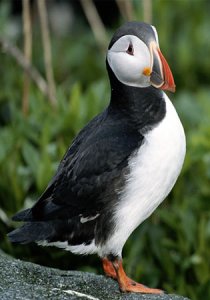
And here’s a picture of an Atlantic puffin, courtesy of the National Geographic website. Just because.

Photograph by Roy Toft

Photograph by Roy Toft

Posted in Pol 266 Politics and Culture | Tagged , , | Leave a comment

Quick bits (266)

Here’s the Sy Hersh story I mentioned in a previous comment. Although some New Yorker pieces require a subscription, this piece is currently available to everyone.

Oh, and more good (as in, the opposite of good) news out of Afghanistan: President Hamid Karzai has just signed a bill which further reduces the already terrible status of women in the country. To wit: married (Shi’a) women can no longer refuse to have sex with their husbands (i.e., there’s no such thing as rape in marriage), child marriage is now legal (although perhaps we should cheer that the age of girls’ marrying was raised from 9 to 16), and women may now be restricted from leaving the home.

Note that these changes in personal laws are directed at the Shi’ite minority in Afghanistan; how long before non-Shi’a men complain about the unfair privileges given to Shi’a men?

Needless to say, this all. . .just. . . great. Just absolutely great.

On the other hand, perhaps we should be cheered that the Taliban are becoming ever more reasonable. To wit:

The Taliban are now prepared to commit themselves to refraining from banning girls’ education, beating up taxi drivers for listening to Bollywood music, or measuring the length of mens’ beards, according to representatives of the Islamist movement. Burqas worn by women in public would be “strongly recommended” but not compulsory.

Oh, okay. Then everything’s all right, then.

Posted in Pol 266 Politics and Culture | Tagged , , , , | Leave a comment

Work, money, work (228)

More comments on G&T, chapter , um, 9? Yeah, whatever chapter we’re on.Eight. We’re on chapter eight. (Damn, I’m tired. . . .)

  • What of the notion of ending poverty? Do G&T take this call seriously (enough)? And what of Moore’s observation about caring too much about the sex lives of the poor—in many cases, the sex lives of poor black people. Thus the question: Do G&T adequately consider role of race in calls for welfare reform? [~p. 277]
  • Yes, Philippe Van Parjis makes this argument, but is this really the best egalitarian critique of welfare reform? More to the point, is the egal critique the most forceful critique from the left? What of radical critiques of the particular form of American capitalism, ie, one which relocates the subject from the individual poor person to the economic system in which the poor person lives/which the system produces? [~p. 278]
  • Presumption here of indiv adult responsibility, but faultlessness of children. But what if conditions in child’s life disable her in a morally significant manner in terms of responsibility? Libts acknowledge this in a roundabout way w/their concern for the culture of poverty: kids grow up not knowing any other way, so must end this dysfunctional way. Anti-poverty activists often suspicious of cult of pov arguments, but what if take seriously? A fair amount of evidence that conditions of childhood development affect child’s intelligence and social adaptability. These studies focus on the psychological consequences of development, but it clearly has a sociological component as well: if some children (poor, or in certain kinds of rural or urban environments) lack access to the conditions of full development, they will thus lack the capacities as adults which are generally presumed to exist when these adults are assigned responsibility for their actions. In other words, what is thought to underlay or, perhaps, creates the conditions for, the elements which compose responsibility? Perhaps the first question to be asked is What are the elements of responsibility? Then one can ask about the conditions which create and sustain those elements. This might add another dimension to discussions about indiv-vs-govt (or social) responsibility, such that one might consider individual responsibility a goal rather than an assumption, and thus consider what is involved in achieving this goal. [~p. 290]
  • Unasked: It is better for kids to have parent at home, or have parent working and placed in child care? What if child care suboptimal? What if minimum wage job lousy or far from home, such that parent unable to spend much time w/child? [~p. 295]
  • G&T keeps emphasizing faultlessness, which, given their general moderate-liberal bent, makes sense. But what of claim that humans deserve help even when at fault? Given that we are, after all, human, ie, flawed, mortal, prone to err, wouldn’t it make more sense for the reciprocity prin to base our actions on what we actually are and are likely to do, rather than on some notion of faultlessness or innocence? This doesn’t lessen any notion of obligation; it may, in fact, strengthen it, and not only from well-off to needy, but also needy to well-off. One could argue that since we all mess up, we all are responsible for helping each other out, which means that the poor person (who, after all, is just poor, not other-than-human) has an obligation to help out those who are better off when they need it, just as the wealthy have obligations to the poor. [~p. 295]

Overall impression? Less infuriating than the chapter on surrogacy, but still with the Goldilocks thing! Shees. Enough with the Goldilocks thing!

Posted in Pol 228 Democracy and Its Critics | Tagged , , , , , | Leave a comment